
What Are Halal Food Certification Standards?
Learn what Halal food certification standards mean, why certification matters, and how J&M’s longstanding partnership with IFANCA helped advance Halal food standards.
For Muslim consumers, a Halal certification mark on a food package holds important meaning. But what does Halal certification actually require, and how can consumers know what a certification represents?
Halal food certification goes beyond simply checking whether a product contains pork or alcohol. Depending on the product and certifying organization, the process can include reviewing ingredients, sourcing, manufacturing practices, processing equipment and, for meat and poultry, religious slaughter requirements.
At J&M Food Products, these questions have been part of our work in the Halal market for decades. Our longstanding partnership with the Islamic Food and Nutrition Council of America (IFANCA) has helped shape our approach to Halal certified food and our commitment to serving Muslim consumers.
What Does Halal Certified Mean?
Halal means “permitted” or “lawful” under Islamic law. Halal food certification provides verification that a product has been evaluated according to the standards of a Halal certifying organization.
Depending on the product, certification may evaluate:
-
Ingredients and Sourcing: Ingredients and their sources must meet the certifier’s Halal requirements.
-
Processing Aids and Other Components: Flavors, seasonings and other components may also require review.
-
Manufacturing and Handling: Production practices and equipment may be evaluated to ensure Halal requirements are maintained.
-
Meat and Poultry: Applicable Halal slaughter and processing requirements must be followed.
This is why credible third-party certification matters. It provides consumers with more information than a manufacturer simply describing a product as Halal.
Why Do Halal Certification Standards Matter?
When J&M entered the Halal market, the U.S. certification landscape was far less developed. The company encountered inconsistencies in certification practices, questions about oversight and independence, and even unauthorized use of certification symbols.
Those experiences reinforced an important principle: Halal certification is most meaningful when consumers understand who is certifying a product and the standards behind that certification.
Certification standards can vary among certifying organizations, and interpretations of what is acceptable can also differ among Muslim consumers. For consumers and institutional buyers, identifying the organization behind the certification can therefore be just as important as seeing the word Halal on the package.
How Did J&M’s Partnership With IFANCA Help Advance Halal Standards?
J&M’s relationship with IFANCA goes back decades.
As the U.S. Halal food market developed, J&M founder Mary Anne Jackson worked with IFANCA to address the practical challenges of applying Halal requirements to commercial food production.
In 1997, Mary Anne Jackson and IFANCA co-authored and published the Halal Industrial Production Standards book to help support the development of the U.S. Halal market.
The collaboration helped translate Halal dietary requirements into standards that could be understood and applied within food manufacturing. It also established a relationship between J&M and IFANCA that continues today.
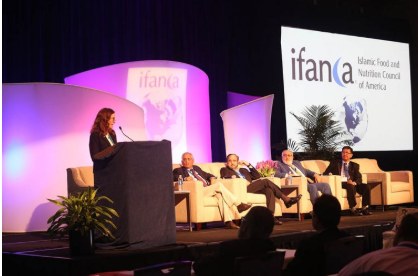
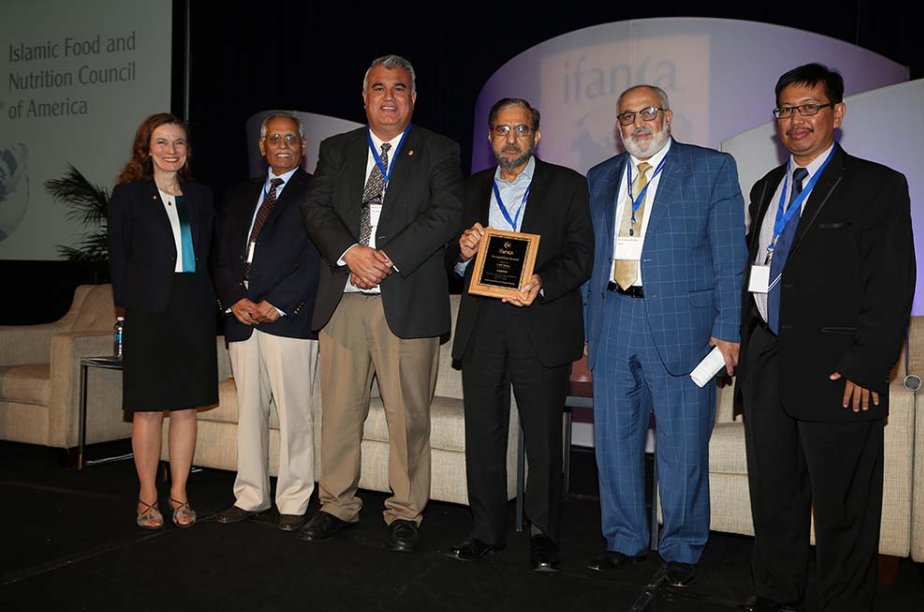
In 2017, Mary Anne Jackson participated in IFANCA’s 19th Annual International Halal Food Conference in Chicago, where she moderated a panel addressing Halal food certification standards and issues related to Halal meat production.
How Has the Halal Food Market Evolved?
The Halal food market has changed considerably over the decades. Trained inspectors have become more prevalent, while consumers, businesses and governments have placed greater scrutiny on certifying organizations and the standards they follow.
International trade has also made certification increasingly important. Requirements for Halal food imports can vary by country, including which Halal certification organizations are recognized or accepted.
For food manufacturers, Halal certification is therefore more than a symbol on a package. It represents the standards, processes and oversight behind the product.
What Should You Look for When Choosing Halal Certified Food?
Whether you’re choosing food for yourself, your family or an organization, start by looking for a recognized Halal certification mark and identifying the organization responsible for the certification.
For institutional food buyers, additional questions may include:
-
Who Certifies the Product?
-
Does the Certification Apply to the Specific Product Being Purchased?
-
What Standards Does the Certifying Organization Follow?
-
For Meat and Poultry, What Halal Requirements Apply to the Meat Used?
These questions help move the conversation beyond simply asking “Is it Halal?”, to understanding “How do I know it is Halal?”
A Longstanding Commitment to Halal Certification
For J&M Food Products, Halal certification has been central to our work in the Halal market for decades.
Our longstanding partnership with IFANCA, including our work together on the Halal Industrial Production Standards© manual in 1997, reflects a shared commitment to meaningful standards and responsible oversight.
Today, that commitment continues through J&M’s Halal certified, shelf stable meals and our work to serve Muslim consumers and the organizations that provide meals for them.
FREQUENTLY ASKED QUESTIONS
Common questions about halal certification
Find More Answers on our FAQ Page.
Is all meat in J&M® halal meals hand-slaughtered according to Dhabiha Halal requirements?
Yes. All meat used in J&M® halal meals is hand-slaughtered by a trained Islamic slaughter man according to Dhabiha Halal requirements.
Is all poultry in J&M® halal meals hand-slaughtered by a trained Islamic slaughter man?
J&M® works with Islamic slaughter men and halal certifiers who require the poultry slaughter line to be slowed so a trained Islamic slaughter man can recite the blessing over each bird individually. Any bird missed in this process is removed from the line and sold as non-halal. Fully hand-slaughtered poultry supply chains are still developing across the U.S. halal industry, and J&M® is actively working with suppliers to expand this practice.
What does 'Dhabiha Halal' (Zhabiha) mean?
Dhabiha Halal (also spelled Zhabiha Halal) refers to meat, poultry, and meat by-products that are properly slaughtered by a trained Islamic slaughter man following specific religious procedures. It's the certification standard J&M® uses for all meat-based meals.
What does 'Halal' mean?
Halal means "proper and permitted" under Islamic dietary law. Halal-designated foods meet Islamic religious dietary requirements and are approved for consumption. All fruits, vegetables, and grains are halal by default; meat and processed foods require certification to confirm they meet halal standards.
What is the difference between Kosher and Halal certification?
Kosher and Halal are separate certifications with different requirements, so a Kosher-certified product is not automatically Halal, and vice versa. Key differences: alcohol in flavors or colors is not a Kosher issue but disqualifies a product from Halal certification; Kosher slaughter does not fulfill the Islamic requirement of reciting a blessing over each animal; and many Kosher-certified vegetarian items (cheese, marshmallows, candy, baked goods, yogurt) may contain enzyme or gelatin ingredients that aren't Halal-compliant. Dual Kosher and Halal certification, like J&M® and My Own Meals® products hold, requires meeting both standards independently.