
A Halal certified meal requires more than Halal ingredients. The sourcing and handling of those ingredients and the equipment and procedures followed to produce them also matter.
From ingredient approval and production methods, to preventing cross-contamination and verifying manufacturing practices, Halal food production requires controls throughout the process. For meat and poultry meals, there are additional requirements surrounding proper Halal slaughter and handling.
For decades, J&M Food Products Company has produced its Halal certified meals with care and consistency while meeting strict halal production standards. Our longstanding partnership with the Islamic Food and Nutrition Council of America (IFANCA) assures the high standards we follow at every stage of production.
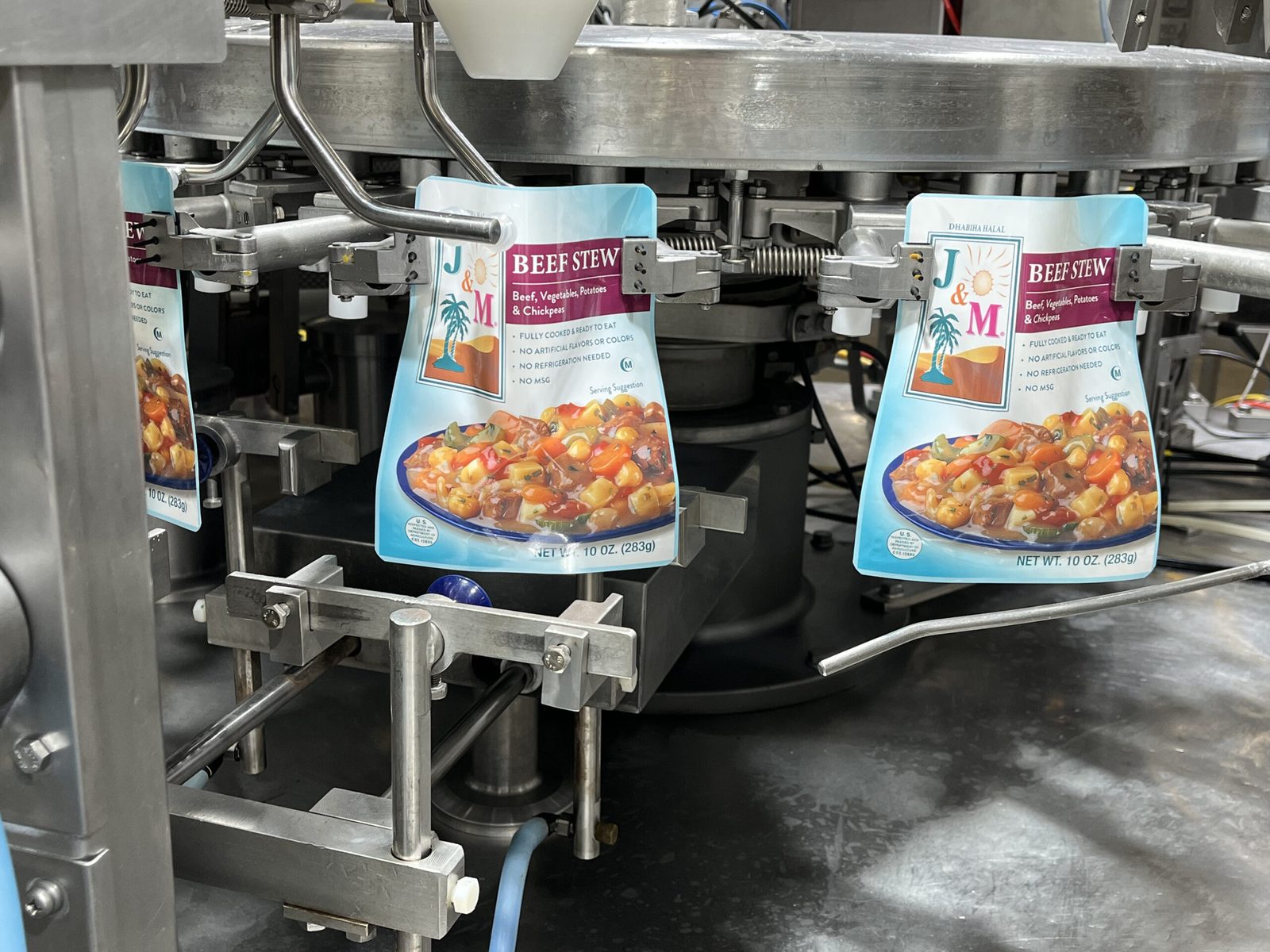
What Is Halal Food Production?
Halal food production is the process of manufacturing food products and meals according to applicable Islamic dietary requirements while adhering to the standards of the product’s Halal certifying organization.
Producing a packaged meal means looking beyond just the ingredients used. The production process itself may involve requirements for:
-
Ingredients and Suppliers: Ingredients and their sources must meet applicable Halal requirements.
-
Production Equipment: Equipment must be appropriately prepared and cleaned before Halal production begins.
-
Cross-Contamination Controls: Procedures must be in place to protect Halal products from contact with non-Halal materials, equipment, and ingredients during production.
-
Manufacturing Procedures: Following established production and quality procedures helps maintain Halal requirements throughout manufacturing.
-
Inspection and Verification: Trained inspectors and established certifying organization standards and procedures provide oversight and verify that required practices are followed.
-
Meat and Poultry: Halal meat and poultry have additional religious slaughter and handling requirements.
Established controls and oversight throughout production assure the end product maintains its Halal integrity from purchasing, inspection of cleanliness to the final delivered meal.
Why Is Preventing Cross-Contact Important in Halal Food Production?
Cross-contact prevention becomes especially important in facilities that manufacture both Halal and non-Halal foods either at the same time or one after another.
Shared production equipment requires careful cleaning and inspection before Halal manufacturing begins. Halal and non-halal meat ingredients used on shared equipment require the strictest cleaning requirements.
Halal meal production requires planning and establishing procedures before the first ingredient ever enters the production line.
What Role Does Halal Supervision Play?
Independent oversight of trained halal supervisors or inspectors verifies that manufacturers follow established halal procedures and standards.
The level of inspection can depend on the manufacturing environment. A facility that consistently produces the same approved products using the same ingredients and suppliers may operate under established procedures with confirming periodic inspections.
However, a manufacturing facility that also produces non-Halal products, or changes suppliers, or ships internationally, or has a complicated process, may require greater oversight during Halal production to help prevent cross-contamination and to assure the product’s halal status.
For J&M® meals, IFANCA pre-approves ingredients and suppliers, and establishes production standards especially when producing Halal and non-Halal meals at the same time. An on-site trained Islamic supervisor verifies compliance and oversees production to support IFANCA’s halal certificate.
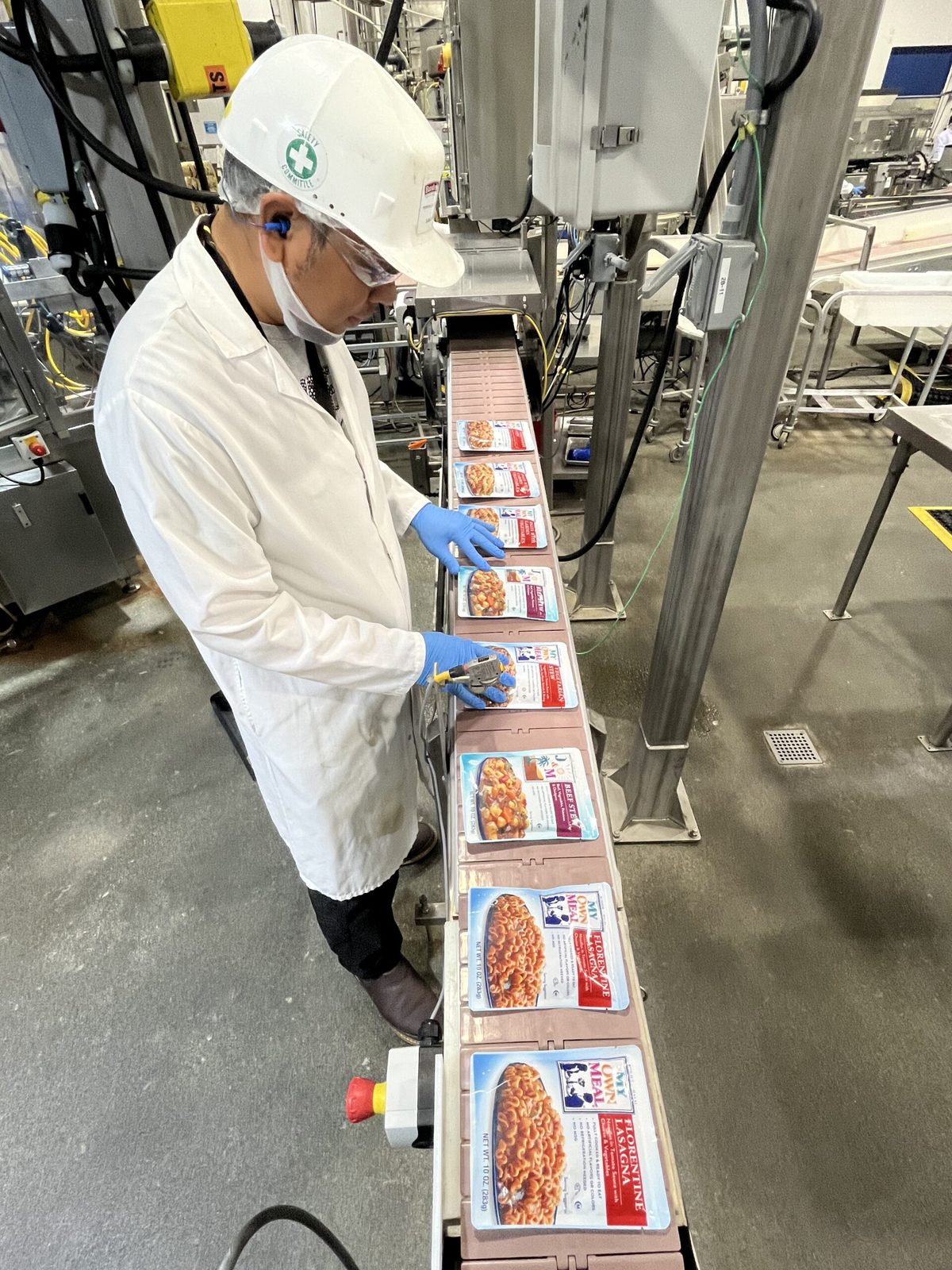
How Are Halal Meat and Poultry Meals Different?
Meat and poultry add another important layer to Halal food production certification. For a meal to be certified as Dhabiha/Zhabiha, not only do all ingredients and manufacturing require approval, but also the Islamic slaughter and handling practices of the supplier require independent Halal oversight.
It is not enough for a supplier to eliminate pork and alcohol and then self-review ingredients and declare the meal as halal. For example, sub-ingredients could include a meat derivative like gelatin not sourced from a halal-slaughtered animal or a sauce base flavor. Without independent oversight and certification, the consumer cannot be sure of the meal’s true halal status.
Helping Define Standards for Halal Food Production
J&M’s involvement in Halal production standards goes back to the early development of the U.S. Halal food market.
As manufacturers worked to translate Islamic dietary requirements into practical procedures for commercial food production, J&M founder Mary Anne Jackson worked with IFANCA to document halal standards.
That collaboration led Mary Anne Jackson and IFANCA to co-author, publish and copyright the Halal Industrial Production Standards© manual in 1997. Its goal was to document and help the food industry implement and understand practical ways to achieve proper halal status for their meals and it remains relevant today.
Why Halal Certified Production Standards Still Matter
Without standards, consumers/customers have no basis to compare alternatives or to make informed and reliable purchases. Meal preparation and production involve using raw and partially prepared ingredients from a variety of suppliers, many with complex production environments of their own. Both the meal producer and the Halal certifying agency have the responsibility to inform the consuming market about what standards they follow.
J&M’s Approach to Halal Certified Meals
J&M Food Products produces shelf stable meals with independent on-site supervision and certification by IFANCA. Our goal remains straightforward: to provide reliable, delicious, Halal certified meals backed by defined standards, independent certification and careful production practices.
Key factsWhat is halal food production?
Manufacturing food and meals according to applicable Islamic dietary requirements while following the standards of the product's Halal certifying organization.
Is a halal meal just halal ingredients?
No. Ingredient sourcing, equipment preparation, cross-contact controls, manufacturing procedures and inspection all matter. Meat and poultry also have additional slaughter and handling requirements.
Why does cross-contact prevention matter?
It matters most in facilities that make both Halal and non-Halal foods. Shared equipment needs careful cleaning and inspection before Halal manufacturing begins.
What does halal supervision do?
Trained supervisors or inspectors verify that manufacturers follow established Halal procedures. For J&M meals, IFANCA pre-approves ingredients and suppliers, and an on-site Islamic supervisor oversees production.
How are halal meat and poultry meals different?
They add independent oversight of the supplier's Islamic slaughter and handling practices. Eliminating pork and alcohol and self-reviewing ingredients is not enough to declare a meal halal.