
Yes, but only under specific circumstances. Vegetarian and plant-based packaged foods can be both Halal certified and Kosher certified when they meet the requirements of both certification authorities. This is known as dual certification.
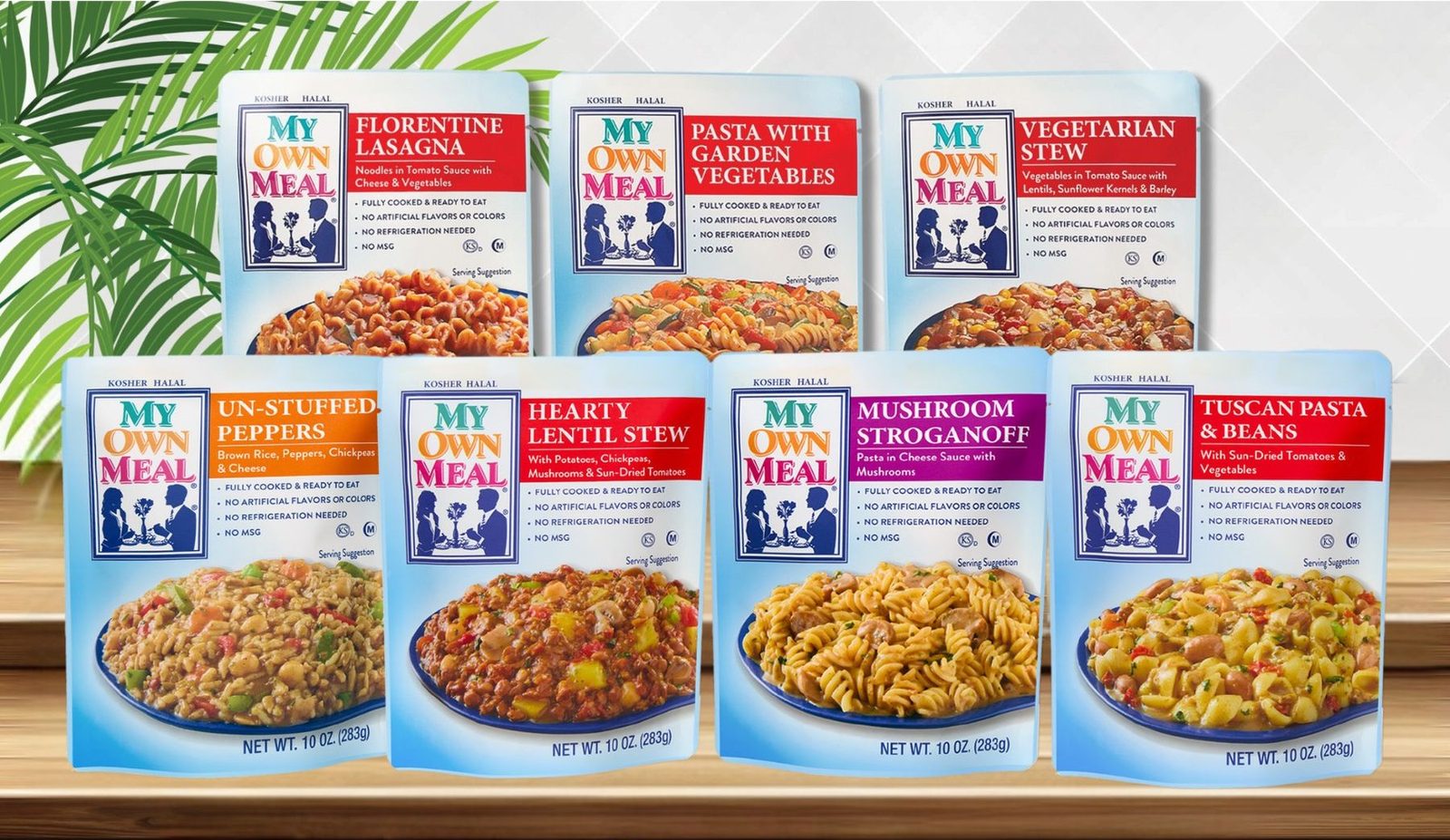
My Own Meals, Inc. and J&M Food Products Co. have been offering dual certified non-meat meals since the 1990s. These meals provide an option for consumers and organizations serving Muslim and Jewish populations as well as vegetarians.
What Does Halal and Kosher Dual Certification Mean?
Halal and Kosher have separate religious dietary standards uniquely established and defined by religious beliefs. A Kosher certification does not automatically make a food item Halal, and a Halal certification does not automatically make a food item Kosher.
For a vegetarian packaged food to qualify for both certifications, it must satisfy the specific and unique requirements of each certifying organization. That review extends beyond the primary ingredients to include sub-ingredients, seasonings, fats, processing aids, production equipment, manufacturing practices, and other components affecting the finished product.
The My Own Meal® dual certification means the product has qualified for two separate certifications, not that one certification has been accepted in place of the other.
Why Are Vegetarian and Plant-Based Meals Well Suited For Dual Certification?
Without meat or poultry ingredients, the unique requirements surrounding religious slaughter are removed from consideration. That makes vegetarian and plant-based foods particularly well suited to dual certification, provided their ingredients and production processes meet the requirements of each certifying organization.
For businesses, governments and non-governmental organizations responsible for feeding diverse populations, dual certification of non-meat meals can also provide an operational advantage. A dual certified vegetarian meal may be used in both Halal and Kosher meal programs as well as plant-based meal programs, helping institutions reduce the number of separate products and stock keeping units (SKUs) they need to source, stock, and manage.
Can Meat or Poultry Foods Be Certified Both Halal and Kosher?
No, meat and poultry cannot be dual certified halal and kosher.
Both religions have specific requirements surrounding the slaughter and handling of meat and poultry, and those requirements are not identical. Unlike some competitors, J&M does not purchase Kosher Certified meat/poultry as equivalent to Halal Certified meat.
The J&M® brand means the meat and poultry ingredients in those meals only come from certified Islamic slaughtered meat/poultry suppliers. My Own Meal® meat and poultry meals have only Kosher Certified meat/poultry ingredients which have been slaughtered and certified by trained slaughtermen (shochet).
Only My Own Meal® branded vegetarian meals are dual certified.
What Benefits Does Dual Certification Offer For Institutions?
For universities, correctional facilities, healthcare organizations, government agencies, emergency feeding programs, office lunch centers, and other institutions, religious dietary accommodations can create operational challenges.
When a vegetarian meal satisfies both Halal and Kosher certification requirements, dual certified options can help simplify inventory and menu planning while still providing a religiously certified meal.
The Bottom Line
Can meals be both Halal and Kosher certified? It depends. Vegetarian and plant-based packaged foods can be dual certified when they independently meet the requirements of both certifications.
Halal and Kosher have distinct religious standards, and one certification should not automatically be considered as a substitute for the other.
My Own Meals offers dual certified vegetarian meals that Muslim, Jewish and vegetarian consumers can confidently enjoy. J&M® meat and poultry meals contain Dhabiha Halal Certified meat and poultry and are certified specifically for Muslim consumers.
Frequently Asked Questions
Where can I buy Kosher Certified Meat Meals?
Our parent company My Own Meals carries kosher certified meat meals, and you can learn more about them at: myownmeals.com
Can vegetarian meals be both Halal and Kosher certified?
Only under specific circumstances. Vegetarian and other non-meat packaged foods can be both Halal certified and Kosher certified when they meet the requirements of both certification authorities. This is known as dual certification.
My Own Meals, Inc. and J&M Food Products Co. have been offering dual-certified non-meat meals since the 1990s. These meals provide an option for consumers and organizations serving Muslim and Jewish populations as well as vegetarians.
Is Kosher food automatically Halal?
No. Halal and Kosher certifications follow separate religious dietary standards. A Kosher certification alone does not mean a packaged food is Halal certified.
Is Halal food automatically Kosher?
No. A Halal certification alone does not mean a packaged food is Kosher certified.
Are J&M meat and poultry meals dual certified?
No. J&M meat and poultry meals use Dhabiha Halal Certified meat and poultry which are certified for Muslim consumers. My Own Meal brand dual certified offerings are vegetarian.
Key factsCan a meal be both halal and kosher certified?
Vegetarian and plant-based packaged foods can be, when they independently meet the requirements of both certification authorities. This is called dual certification.
Is kosher the same as halal?
No. Halal and Kosher follow separate religious dietary standards, and one certification does not automatically make a food the other.
Can meat or poultry be both halal and kosher certified?
No. Each religion has its own requirements for slaughter and handling, so meat and poultry cannot be dual certified.
Which meals are dual certified?
Only My Own Meal brand vegetarian meals. J&M brand meat and poultry meals use Dhabiha Halal Certified meat and poultry and are certified for Muslim consumers.
Why does dual certification help institutions?
One vegetarian meal can serve halal, kosher and plant-based meal programs, which reduces the number of separate products to source, stock and manage.